How Digital Boards Are Transforming Indian Classrooms
A Shift from Passive Learning to Active Participation

Making Complex Topics Easy to Understand

Saving Time for Teachers

Real-Time Assessment and Instant Feedback

Supporting Different Learning Styles

Reducing Teacher Burnout

Encouraging Collaboration and Group Learning

Bridging the Gap Between Urban and Rural Education

Preparing Students for the Future

Improving Classroom Management

Cost-Effective in the Long Run

Real Classroom Impact

Conclusion: A Smart Step Toward Better Education
Frequently Asked Questions (FAQs)
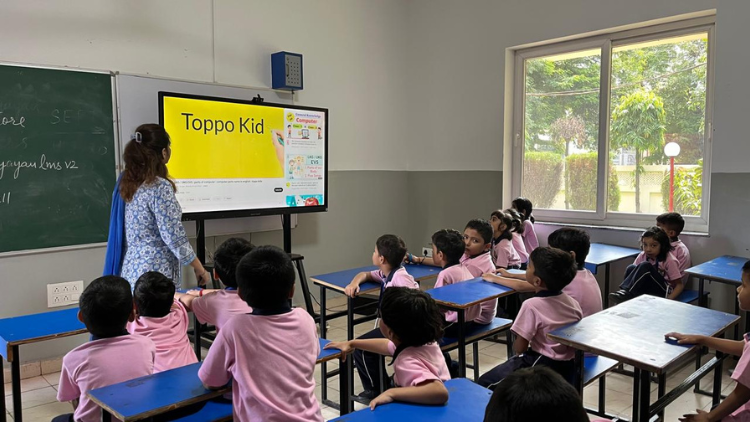
Digital boards in Indian classrooms are advanced teaching tools that replace traditional blackboards or whiteboards. These boards come with touchscreen features, internet access, and multimedia support. Teachers can display videos, images, presentations, and interactive content directly on the board. This makes lessons more engaging and easier to understand. Schools across India use these boards to improve teaching quality and student participation. Unlike traditional methods, digital boards allow teachers to save notes, conduct quizzes, and access ready-made content instantly. This helps create a more interactive and effective learning environment for students of all age groups.
Digital boards in Indian classrooms improve learning by making lessons more visual and interactive. Students understand better when they see animations, diagrams, and real-life examples. These boards also allow teachers to conduct live quizzes and instant assessments, which help students learn from their mistakes quickly. In a smart classroom India, students actively participate instead of just listening. This increases their attention and interest in studies. Digital boards also support different learning styles, which ensures that every student can grasp concepts easily. Overall, they make learning faster, clearer, and more engaging.
A smart classroom India setup includes digital boards, internet connectivity, and multimedia tools that support modern teaching methods. It allows teachers to use videos, presentations, and interactive content during lessons. This setup helps create a more engaging classroom experience where students can participate actively. In such classrooms, teachers can access digital content instantly and explain topics more effectively. A smart classroom India also supports real-time assessments and collaborative learning. Schools that adopt this setup often see better student performance, improved attendance, and higher engagement levels in daily lessons.
Yes, digital boards in Indian classrooms suit all types of schools, including private, government, and rural schools. These boards help provide equal learning opportunities by offering access to quality digital content. Even schools in remote areas can use them to improve teaching standards. With proper training, teachers can easily adapt to this technology. Many schools start with one or two digital boards and gradually expand. This flexibility makes them a practical solution for different budgets. Over time, digital boards help schools enhance learning outcomes and modernize their teaching approach.
Yes, digital boards in Indian classrooms significantly reduce teacher workload. Teachers can save lesson plans, reuse content, and access ready-made resources instead of preparing everything from scratch. This saves time and effort. In a smart classroom India, teachers can quickly switch between topics, show visuals, and conduct quizzes without extra preparation. Digital boards also reduce the need for writing lengthy notes on the board. As a result, teachers can focus more on explaining concepts and interacting with students. This improves both teaching quality and teacher productivity.
Digital boards in Indian classrooms support visual, auditory, and interactive learning styles. Teachers can combine videos, images, text, and audio to explain a topic. This helps students who learn in different ways. For example, visual learners understand better through diagrams, while auditory learners benefit from explanations and discussions. In a smart classroom India, teachers can use multiple formats in one lesson. This ensures that every student stays engaged and understands the topic clearly. By addressing different learning preferences, digital boards make education more inclusive and effective.
While the initial cost may seem high, digital boards in Indian classrooms prove cost-effective in the long run. Schools save money on printing, charts, and other teaching materials. Teachers can reuse digital content, which reduces recurring expenses. In a smart classroom India, schools also improve their reputation, which can attract more admissions. Additionally, better learning outcomes lead to higher student satisfaction. Over time, these benefits outweigh the initial investment. Many schools consider digital boards a valuable long-term asset that enhances both teaching quality and overall school performance.
Yes, digital boards in Indian classrooms can work without the internet for basic functions. Teachers can use offline content such as saved presentations, videos, and documents. However, internet connectivity enhances their full potential by allowing access to online resources, educational platforms, and live content. In a smart classroom India, schools often combine offline and online resources for better results. Even without constant internet access, digital boards remain useful for teaching. This makes them a practical option for schools in areas with limited connectivity.
Digital boards in Indian classrooms make assessments faster and more effective. Teachers can create quizzes, polls, and tests directly on the board. Students can answer instantly, and teachers can view results in real time. This helps identify weak areas quickly. In a smart classroom India, teachers can adjust their teaching based on student performance. Digital boards also reduce the time needed for checking papers and giving feedback. This improves the overall assessment process and helps students learn more efficiently.
Digital boards in Indian classrooms represent the future because they align with modern learning needs. Students today grow up with technology, and digital boards make learning more relevant and engaging. They support interactive teaching, improve understanding, and prepare students for digital careers. In a smart classroom India, students develop critical thinking and problem-solving skills. Schools that adopt digital boards stay ahead in providing quality education. As technology continues to evolve, digital boards will play a key role in shaping the future of education in India.
Related post:
- SmartSchool Education Conducts April 2026 CSR Activity at Aapke Saath Foundation, Noida
- How Teachers Can Save Time Using an Interactive Flat Panel
- Ministry of Agriculture and Farmers Welfare Partners with SmartSchool Education for Digital Learning Transformation
- How Interactive Flat Panels Improve School Branding
- Empowering Lives Together: Smartschool Education Limited’s CSR Initiative with Sai Welfare Society NGO
- Smart Classroom Digital Board - What Schools Should Buy
- Why Every School Should Invest in Interactive Flat Panels in 2026
- Empowering Young Dreams: SmartSchool Education’s Inspiring CSR Visit to Bhavishya Trust NGO, Noida
- Ramagya Group of Schools Partners with Studynlearn Interactive Flat Panels
- A Proud Moment: Ministry of Science and Technology Chooses Studynlearn Interactive Flat Panel