Top Benefits of Digital Signage for Education, Retail & Corporate
Why Visual Communication Matters Today

Benefits in Education

1. Simplifies School Communication
2. Creates a Modern Learning Environment
3. Supports Eco-Friendly Practices
4. Improves Student Engagement
Benefits in Retail
5. Attracts Customer Attention
6. Boosts Sales with Dynamic Offers
7. Enhances Shopping Experience
8. Reduces Marketing Costs
Benefits in Corporate Offices

9. Improves Internal Communication
10. Builds Strong Brand Image
11. Increases Employee Engagement
12. Supports Training and Development
Key Features to Look For

- Easy content management
- High-quality visuals
- Remote update options
- Support for videos and images
Conclusion: A Smart Investment for Growth
Frequently Asked Questions (FAQs)
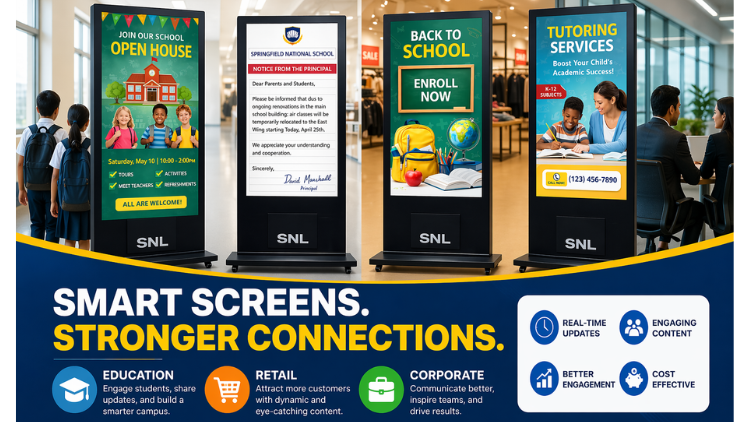
Digital signage is a modern way to display information using screens instead of printed posters. It uses software and hardware to show content like images, videos, and announcements. You can control and update content from a central system, often remotely. This makes it easy to share real-time information across multiple locations. Schools use it for notices, retailers use it for promotions, and offices use it for internal communication. It works through a media player connected to a screen, which displays scheduled or live content. This system saves time, reduces manual work, and ensures consistent communication across all users.
Digital signage helps schools improve communication and student engagement. Teachers can use it to display visual content like videos and diagrams, which makes learning easier to understand. Schools can also share announcements such as exam schedules, events, and important notices instantly. This reduces confusion and ensures every student receives the same information. It also helps schools reduce paper usage, making them more eco-friendly. Additionally, it creates a modern classroom environment that attracts parents and students. Overall, it improves efficiency, saves time, and supports better learning outcomes in schools.
Retail stores use digital screens because they grab customer attention quickly. Bright visuals and moving content attract more people compared to static posters. Stores can promote offers, discounts, and new arrivals in real time. This helps increase sales and improves the shopping experience. Retailers can also update content anytime without printing new banners, which saves money. These screens also allow businesses to display multiple promotions throughout the day. As a result, stores become more engaging and interactive, which encourages customers to spend more time and make purchasing decisions.
Digital signage helps corporate offices share information quickly and clearly. Companies can display announcements, meeting schedules, and important updates on screens placed across the office. Employees do not need to check emails repeatedly, as they can see updates in real time. It also helps management communicate important messages effectively. Additionally, companies can use it to display employee achievements and company milestones, which boosts morale. It creates a transparent and engaging work environment. Overall, it improves communication flow, saves time, and increases productivity within the organization.
Yes, digital signage is cost-effective in the long run. Although the initial setup may require investment, it reduces ongoing costs like printing posters and banners. Businesses can update content instantly without additional expenses. It also saves time and reduces manual effort. Over time, it helps increase efficiency and improves communication, which adds value to operations. Retail stores can boost sales, and offices can improve productivity. Schools can reduce paper costs. When you consider these benefits together, digital signage becomes a smart and cost-efficient solution for modern communication needs.
Yes, most digital signage systems allow remote updates. You can control content from a central dashboard using the internet. This means you can update screens in multiple locations without being physically present. For example, a school can update announcements across all campuses instantly. Retail chains can change offers in all stores at once. Corporate offices can share updates across different branches. This feature saves time and ensures consistent communication. Remote access also allows quick changes during emergencies or special events, making the system highly flexible and efficient.
Digital screens can display a wide range of content formats. You can show images, videos, presentations, scrolling text, live news, and social media feeds. Schools can display educational videos and announcements. Retail stores can show promotional videos and product highlights. Offices can display dashboards, company news, and meeting schedules. You can also schedule content based on time or audience. This flexibility makes digital screens useful for different industries. By using engaging and relevant content, organizations can communicate more effectively and capture attention easily.
Yes, digital signage is suitable for small businesses as well. It helps them compete with larger brands by improving visibility and customer engagement. Small shops can use screens to display offers, product details, and promotions. This attracts more customers and increases sales. It also reduces the need for printed marketing materials, which saves money. Many affordable options are available today, making it easier for small businesses to adopt this technology. With the right setup, even a single screen can make a big difference in how a business communicates with its customers.
Digital signage improves customer experience by providing clear and engaging information. Customers can quickly understand offers, product details, and store layout through visual content. This reduces confusion and saves time. In retail, it helps customers make faster decisions. In offices, it helps visitors navigate easily. In schools, it keeps students informed. Interactive and visually appealing content creates a better overall experience. When customers or users feel informed and comfortable, they are more likely to engage positively with the environment.
Before choosing a digital signage solution, you should consider your needs and goals. Think about where you will use it and what type of content you want to display. Check screen quality, software features, and ease of use. Make sure the system allows remote updates and supports multiple content formats. Also, consider installation, maintenance, and support services. Budget is important, but you should focus on long-term value rather than just price. Choosing the right solution ensures better performance, smooth operation, and maximum return on investment.