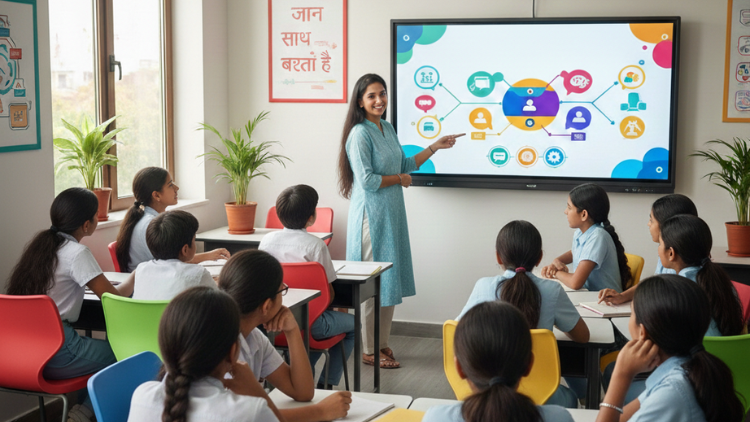
Indian classrooms are changing fast. Students no longer learn only from textbooks and chalkboards. They watch videos, explore 3D models, attend online sessions, and collaborate digitally. If schools want to prepare students for the future, they must upgrade their classrooms today.
In 2026, investing in an interactive flat panel is not a luxury. It is a smart and practical decision. Schools that adopt modern technology create better learning experiences, improve teacher efficiency, and align with national education goals like NEP 2020. Let us understand why every school should take this step now.
1. Clear Visibility in Every Classroom
Many Indian classrooms face one common problem — students sitting at the back cannot see the board clearly. Chalk dust, glare from projectors, and small writing make learning difficult.
An interactive flat panel solves this problem immediately. It offers 4K resolution, bright display, and anti-glare glass. Students can read text, view diagrams, and watch videos clearly from any corner of the room.
Imagine a science teacher explaining the human heart. Instead of drawing a rough diagram, the teacher can zoom into a 3D animated heart, rotate it, and highlight each part. Every student sees the details clearly. Learning becomes simple and effective.
When schools choose the best smart board, they ensure that every student gets equal visibility and equal opportunity to learn.
2. Higher Student Engagement
Students today grow up with smartphones and tablets. Traditional teaching methods no longer hold their attention for long.
An interactive flat panel makes lessons lively and engaging. Teachers can use animations, quizzes, polls, and educational games. Students can come to the board, solve problems, drag and drop answers, and participate actively.
For example, in a mathematics class, the teacher can display a geometry figure and ask students to measure angles directly on the screen. In an English class, students can match words and meanings through interactive activities.
When schools install the best smart board, they transform passive learners into active participants. Engagement increases naturally because students enjoy learning.
3. Real-Time Collaboration and Participation
Modern education focuses on teamwork and communication. Schools must encourage collaboration inside the classroom.
With an interactive flat panel, multiple students can write on the screen at the same time. Teachers can divide the class into groups and assign tasks directly on the board.
Suppose a history teacher asks students to create a timeline of the Indian freedom movement. Each group can add events, images, and notes on the screen. This activity builds teamwork and deeper understanding.
A digital board for teaching supports screen sharing from laptops and tablets. Students can present projects instantly. Teachers can annotate directly over presentations. This feature saves time and increases confidence among students.
4. Cost-Effective in the Long Run
Many school management teams worry about the initial investment. But they should think about long-term value.
An interactive flat panel lasts longer than projectors and traditional boards. It does not require bulb replacement. It consumes less maintenance cost. Schools do not need to buy chalk, markers, or projector accessories repeatedly.
Over five to seven years, the total cost becomes lower than older systems. When schools choose the best smart board, they invest once and benefit for years.
A digital board for teaching also reduces printing costs. Teachers can share notes digitally. Students can access materials online. Schools save money on paper and photocopying.
5. Durable and Safe for Daily Use
Indian classrooms often operate in tough conditions. Dust, heat, and heavy usage can damage regular equipment.
An interactive flat panel comes with strong tempered glass and solid build quality. It handles daily usage without frequent breakdowns. It also reduces chalk dust, which protects teachers and students from respiratory problems.
Unlike projectors, it does not create shadow issues. Teachers can stand close to the screen without blocking the content.
When schools select the best smart board, they ensure durability, safety, and smooth performance throughout the academic year.
6. Supports Hybrid and Digital Learning
The pandemic taught schools an important lesson — digital readiness matters. Even today, many schools conduct online classes, virtual workshops, and remote training sessions.
An interactive flat panel supports video conferencing apps, cloud storage, and screen recording. Teachers can record lessons and share them with absent students. Schools can invite guest speakers virtually.
A digital board for teaching connects easily with learning management systems. Teachers can access digital textbooks, assignments, and assessments in one place.
This flexibility ensures that learning never stops, even during emergencies.
7. Aligns with NEP 2020 Vision
The National Education Policy 2020 encourages technology integration in classrooms. It promotes digital literacy, skill-based learning, and experiential education.
An interactive flat panel directly supports these goals. Teachers can conduct coding sessions, robotics demonstrations, and AI-based learning activities.
For example, students can learn geography by exploring interactive maps. They can understand physics concepts through simulations instead of memorizing formulas.
When schools adopt the best smart board, they show commitment to modern, skill-oriented education. They prepare students not just for exams but for real-world challenges.
8. Makes Teachers More Efficient
Teachers handle lesson planning, evaluation, and classroom management daily. Technology should reduce their burden, not increase it.
An interactive flat panel offers built-in tools like whiteboard apps, subject-specific content, screen recording, and instant saving. Teachers can prepare lessons quickly and reuse them later.
A digital board for teaching allows teachers to store notes directly on cloud platforms. They do not need to rewrite everything every day.
For example, a teacher can save today’s lesson and continue from the same point tomorrow. This feature saves time and improves teaching consistency.
When management invests in the best smart board, they empower teachers to focus more on students and less on manual work.
9. Builds a Modern School Image
Parents today compare schools not only by results but also by infrastructure. A smart classroom creates a strong impression.
When parents visit and see an interactive flat panel in action, they feel confident about the school’s commitment to quality education.
A digital board for teaching signals innovation, progress, and future readiness. It shows that the school values modern learning methods.
This positive image helps schools attract more admissions and build long-term trust.
10. Long-Term Value for Students
Ultimately, every investment should benefit students.
An interactive flat panel develops digital skills, presentation abilities, and collaborative thinking. Students learn how to use technology responsibly. They gain confidence while presenting ideas on a digital screen.
These skills help them in higher education and future careers.
When schools install the best smart board, they invest in students’ future growth, not just classroom equipment.
Conclusion: A Smart Decision for 2026 and Beyond
Education in 2026 demands innovation, flexibility, and engagement. Traditional boards cannot meet modern expectations. Schools must adapt to changing learning styles and technological advancements.
An interactive flat panel offers clear visibility, higher engagement, real-time collaboration, cost savings, durability, and alignment with NEP 2020. It supports hybrid learning and empowers teachers.
If school leaders want to stay ahead, they should not delay this decision. They should evaluate their classroom needs, compare features carefully, and choose the best smart board that delivers long-term value.
Investing in a modern digital board for teaching today ensures better learning outcomes tomorrow. Schools that act now will lead the future of education with confidence and clarity.
For More Information, Call or WhatsApp on: 89270-89270.
Frequently Asked Questions (FAQs)
Schools should invest in interactive flat panels because they improve visibility, engagement, and teaching efficiency. Traditional boards limit creativity and often cause visibility issues for students sitting at the back. Interactive panels offer 4K clarity, touch features, multimedia support, and digital content integration. Teachers can explain complex topics using videos, simulations, and live annotations. Students participate actively instead of just copying notes. Schools also reduce long-term costs on chalk, markers, and projectors. In 2026, digital learning is no longer optional. Schools that adopt modern classroom technology stay competitive and provide better learning experiences.
Yes, interactive flat panels offer strong long-term value. While the initial cost may seem high, schools save money on projector bulbs, maintenance, printing, and classroom supplies over time. These panels last many years and require minimal upkeep. They reduce paper usage because teachers can share notes digitally. Schools also avoid repeated repair expenses that projectors often demand. When management evaluates total cost over five to seven years, the investment becomes financially smart. Instead of short-term thinking, schools should focus on durability, performance, and long-term academic benefits.
Interactive flat panels make lessons visual, dynamic, and interactive. Teachers can use animations, quizzes, drag-and-drop activities, and real-time problem-solving tools. Students can come to the board and participate directly. This approach increases attention and reduces boredom. For example, a science teacher can display a 3D model of the solar system and zoom into each planet. Students understand concepts faster because they see and interact with content. When students engage actively, they remember information longer. Higher engagement leads to better academic performance and stronger classroom participation.
Yes, teachers can learn quickly with basic training. Most interactive flat panels come with user-friendly interfaces similar to smartphones or tablets. Teachers can write, erase, zoom, and save content easily. Schools can organize short training sessions to help staff feel confident. Many panels include built-in whiteboard apps, subject tools, and screen recording options. Teachers do not need advanced technical knowledge. Once they start using it regularly, they find it easier than traditional boards. Instead of increasing workload, the panel saves time and improves lesson planning efficiency.
Yes, interactive flat panels align strongly with NEP 2020. The policy promotes digital literacy, skill-based learning, experiential education, and technology integration. Interactive panels help teachers conduct coding sessions, virtual experiments, and collaborative projects. Students develop digital skills while learning core subjects. Schools can integrate multimedia content and real-world simulations into lessons. This method supports conceptual understanding instead of rote learning. When schools adopt digital classroom tools, they show commitment to modern education standards. Interactive flat panels help schools implement NEP 2020 effectively and confidently.
Yes, interactive flat panels work well in small, medium, and large classrooms. Schools can choose different screen sizes based on room dimensions. Large panels ensure clear visibility even for students sitting at the back. High brightness and anti-glare screens improve viewing comfort. Teachers can adjust text size and zoom into diagrams for better clarity. Whether it is a primary classroom or a senior secondary section, interactive panels adapt easily. Schools should assess classroom size before purchasing to ensure optimal screen selection for maximum learning impact.
Interactive flat panels support video conferencing, screen sharing, and lesson recording. Teachers can conduct live online classes directly from the classroom. They can record lessons and share them with absent students. Schools can invite guest speakers through virtual sessions. This flexibility ensures learning continues during emergencies or special situations. Panels also integrate with cloud storage and learning management systems. Teachers can upload assignments and digital notes easily. Hybrid learning becomes smooth and organized when schools use modern digital tools effectively.
Yes, interactive flat panels actually reduce teacher workload. Teachers can save lessons, reuse content, and access digital resources instantly. They do not need to rewrite notes daily. They can store files in cloud storage and retrieve them anytime. Screen recording helps teachers share explanations without repeating sessions multiple times. Built-in tools simplify diagram drawing and content display. This efficiency allows teachers to focus more on student interaction rather than manual tasks. Over time, teachers feel more organized and confident in delivering lessons.