Beyond Textbooks: How Digital Content Makes Learning More Dynamic and Real
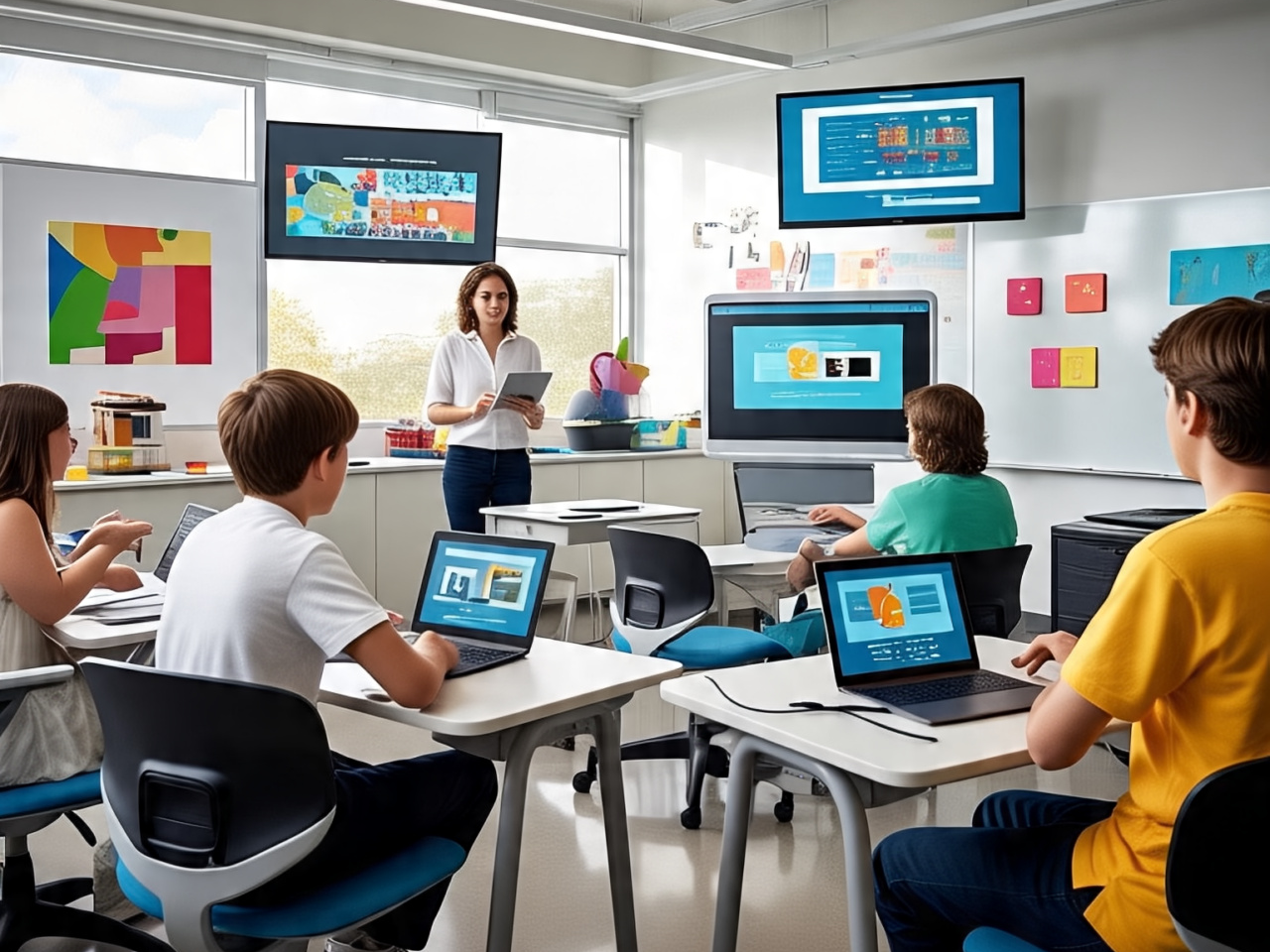
In today’s fast-changing world, learning is no longer limited to textbooks. Students across India now learn through smartboards, tablets, and online platforms. Traditional textbooks are still important, but they cannot match the power of digital content in bringing lessons to life. Digital content makes learning more interactive, visual, and engaging. It helps students understand topics better, stay interested, and remember what they learn for a longer time.
In this blog, let us explore how digital content goes beyond textbooks and transforms classroom learning for Indian students and teachers.
1. What is Digital Content in Education?
Digital content includes all types of learning material that you can access through electronic devices like computers, tablets, or interactive flat panels. This includes:
- Animated videos
- Interactive quizzes
- 3D diagrams
- Digital textbooks
- Online assessments
- Educational games
- Recorded lectures
- Simulation-based learning
Many Indian schools now use platforms like Studynlearn, which provide high-quality K–12 content mapped to CBSE, ICSE, and various state boards.
2. Why Traditional Textbooks Are Not Enough Today
Textbooks have their own importance. They follow a structured syllabus and help in exam preparation. But they have some limitations:
- They lack visuals and real-life examples
- They do not allow interaction or hands-on learning
- They are the same for all students, regardless of their learning speed
- They cannot be updated regularly
In today’s world, students need more than just facts and definitions. They need to understand concepts deeply and apply them in real life. That’s where digital content helps.
3. How Digital Content Makes Learning Dynamic
a) Interactive Videos Bring Concepts to Life
Imagine learning the process of photosynthesis through a short animated video. It shows how sunlight, water, and carbon dioxide work together to make food for the plant. Students not only see the process but also hear the explanation in simple language. This type of learning stays in the mind for a longer time.
b) Quizzes and Games Make Learning Fun
Digital content includes quizzes, puzzles, and games that test a student’s knowledge after each topic. This makes learning more exciting. Students feel challenged and stay motivated to perform better.
c) 3D Models Help Visualize Complex Topics
Subjects like biology and physics become easier when students can see a 3D heart beating or a machine working. 3D models give a clear picture of how things function in real life. This improves understanding and clarity.
d) Instant Feedback Helps Track Progress
With digital content, teachers and students can instantly see quiz results and assessment scores. It helps students know where they are strong and where they need to improve. Teachers can also personalize learning accordingly.
4. Benefits of Digital Content for Indian Students
a) Better Concept Clarity
Digital content breaks down difficult topics into easy-to-understand visuals and audio. For example, a student in Class 10 struggling with trigonometry can understand the concept better with animated graphs and step-by-step problem-solving videos.
b) Learning in Local Languages
Many digital learning platforms offer content in Hindi, Tamil, Bengali, and other regional languages. This helps students in rural and semi-urban India learn comfortably in their mother tongue.
c) Self-Paced Learning
Every student learns at their own speed. With digital content, students can pause, rewind, and rewatch the content anytime. This is especially helpful for slow learners and students who miss school due to illness or other reasons.
d) Learning Beyond the Classroom
Digital content is not limited to school hours. Students can access the content at home, during holidays, or while travelling. This flexibility supports continuous learning.
5. How Teachers Benefit from Digital Content
Digital tools not only help students but also make teaching more effective and enjoyable for teachers.
a) Time-Saving and Easy Lesson Planning
Teachers can access ready-made video lessons, presentations, and quizzes. It saves time in preparing lesson plans and keeps the classroom energetic.
b) Engaging Teaching Method
When teachers use visuals, animations, and smartboards, students pay more attention. The classroom becomes more lively and interactive.
c) Tracking Student Performance
Digital platforms provide detailed reports on student performance. Teachers can easily identify weak students and give extra attention where needed.
d) Support for Inclusive Education
Digital content supports special-needs students with features like audio instructions, slow playback, and visual aids. It ensures every child learns equally.
6. The Role of Digital Content in NEP 2020
The National Education Policy (NEP) 2020 encourages the use of technology in education. It promotes digital learning, blended classrooms, and the development of critical thinking skills.
With NEP’s focus on holistic learning, digital content plays a key role in:
- Encouraging experiential learning
- Promoting multilingual education
- Making education accessible to every child, even in remote areas
- Fostering creativity and innovation through interactive tools
7. Challenges and How to Overcome Them
a) Lack of Internet in Rural Areas
One major challenge is the availability of the internet in remote regions. To overcome this, many platforms offer offline content that can be downloaded once and used later without the internet.
b) Training for Teachers
Teachers need training to use digital tools effectively. Government and private institutions should provide regular training programs to upgrade teachers’ digital skills.
c) Affordability
High-quality digital platforms can be expensive for some schools. Companies like Studynlearn offer affordable smart classroom solutions with K–12 content at reasonable prices to reach more schools.
8. Digital Content Encourages Real-World Learning
Digital content connects classroom lessons with real-life applications. For example:
- A lesson on environmental science can show real videos of climate change impact
- Economics topics can include current news clips and analysis
- Career-related videos can guide students about different professions
This approach helps students understand why they are learning something and how they can use it in life.
9. Future of Learning in India with Digital Content
India is moving fast towards a digitally connected education system. With government initiatives like Digital India, PM eVidya, and Diksha platform, schools across the country are adopting digital content.
We can expect:
- More smart classrooms with interactive flat panels
- AI-powered personalized learning platforms
- Gamification of learning
- More language and region-based content
- Collaboration between the government and private companies to expand digital learning
Conclusion
Digital content is not here to replace textbooks but to enhance them. It makes learning more dynamic, real, and personalized. For Indian students, it brings equal learning opportunities, whether they are in a metro city or a village. Teachers find it easier to explain complex topics and track student progress.
By going beyond textbooks, we unlock the true potential of education to make learning joyful, meaningful, and lifelong.
As we move ahead, the smart use of digital content will ensure that no child is left behind and every student gets a chance to shine.
How Smartschool Education transformed teaching in schools?
Here is a snippet of how Smartschool Education’s Studynlearn Interactive flat panels have changed the teaching methodology of teachers.

"Hello, this is Shalu Rai. I am from APS International School. This is our digital board from StudynLearn. We have two patterns in this. One is a whiteboard, which is offline. When we teach kids on this, they look at things in a very interesting way. Children are interested in the use of a whiteboard. It is very easy for us to teach, too. The second thing is its online pattern. It has all the content from 1st to 12th. Through this, we can provide audio and video lessons to the kids, which helps kids learn very fast. This is very helpful for us. We have been using this digital board for the last 6 months. Its response is very good. Its teaching content is also very good."
- Shalu Rai, APS International School
SmartSchool Education is a prominent EdTech company providing a wide range of educational solutions, including interactive flat panels, all-in-one PCs, a learning app, studio setup services, K-12 digital content, and school books under the Studynlearn and SNL brands.
To Know More, Call or Whatsapp on: 89270-89270
Related post:
- Reimagining Lesson Plans: Creative Ways Teachers Use Digital Content in Classrooms
- Digital Content for Holistic Learning: Blending Academics with 21st-Century Skills
- Smart Learning Starts Here: Exploring the Impact of Digital Content in Schools
- From Chalkboards to Smartboards: The Digital Content Revolution in Classrooms
- Best Practices for Implementing Digital Content Learning in Schools
- How Digital Content Enhances Student Engagement and Academic Performance
- The Future of Education: Why Digital Content is Key to School Success
- Empowering Teachers: The Role of Digital Content in Modern Classrooms
- Transforming Traditional Classrooms with Interactive Digital Content
- Digital Content in Schools: Bridging the Gap Between Theory and Practice