Smart Advertising Screens for Modern Shopping Centers
Why Shopping Centers Need Smarter Visual Communication

Better Customer Engagement Through Visual Experiences

Real-Time Promotions Improve Sales

Easy Content Management for Mall Operators

Improved Navigation Inside Large Shopping Centers

Cost Savings and Long-Term Value

Building a Modern Brand Image

The Role of Analytics and Smart Technology

Conclusion
Frequently Asked Questions (FAQs)
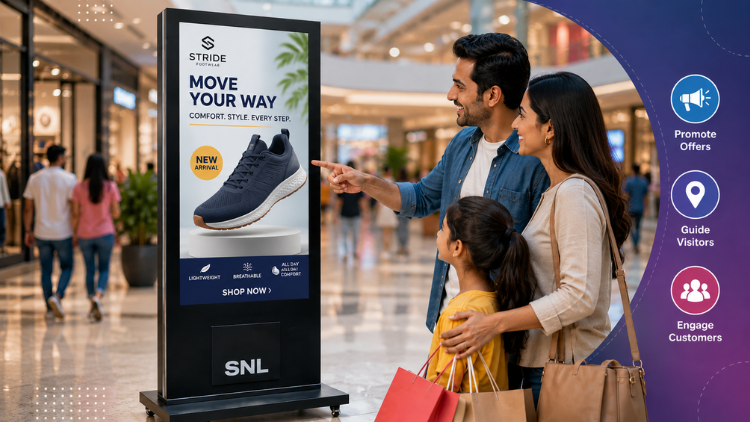
Shopping centers use digital advertising screens to attract customer attention, promote offers, and improve visitor engagement. These screens display dynamic content such as sales promotions, event announcements, movie schedules, and restaurant deals. Unlike printed posters, digital systems allow malls to update content instantly without additional printing costs. Shopping centers also use these screens to guide customers toward stores, parking areas, and entertainment zones. Bright visuals and motion graphics help brands stand out in crowded retail spaces. Many malls in India now use digital communication systems to improve customer experiences, increase store visits, and create modern shopping environments that encourage visitors to spend more time inside malls.
Digital displays improve customer engagement by creating visually attractive shopping experiences. Customers usually respond faster to moving graphics, videos, and interactive content than static banners. Shopping centers use these displays to share personalized offers, festive campaigns, and live event updates. Interactive kiosks also help visitors locate stores and services easily. These systems create convenience while keeping shoppers informed throughout their visit. Customers often spend more time in malls that offer engaging visual experiences because the environment feels modern and entertaining. Retailers benefit because attractive displays increase product visibility and encourage impulse purchases. Many shopping centers now consider digital communication an essential part of customer engagement strategies.
Advertising screens help retail stores improve visibility, communicate promotions quickly, and increase customer interest. Retailers can display high-quality videos, product launches, seasonal campaigns, and discount offers in real time. These systems help stores attract customers walking through busy shopping areas. Unlike traditional signage, digital systems allow businesses to change content instantly according to customer behavior or time of day. Retail stores also save money on repeated printing expenses. Modern advertising screens support better branding because they create a premium and professional image. Many businesses use these systems to strengthen customer engagement, improve product awareness, and increase sales opportunities inside shopping centers.
Yes, digital displays offer long-term cost savings for shopping malls and retail businesses. Traditional advertising methods require frequent printing, installation, and replacement costs whenever promotions change. Digital systems remove these repeated expenses because operators can update content remotely through software platforms. A single screen can display multiple advertisements throughout the day, which helps malls maximize available space. Shopping centers can also generate additional revenue by renting advertising slots to different brands. Energy-efficient LED technology further reduces operational costs compared to older display systems. Although initial installation may require investment, many malls recover costs through improved customer engagement, better promotional efficiency, and additional advertising income.
Interactive advertising screens help customers navigate shopping centers easily and access useful information quickly. Visitors can search for stores, restaurants, cinemas, and gaming zones using touch-enabled systems. These screens provide digital maps, route guidance, and real-time announcements that improve convenience. Customers also use interactive systems to check promotions, scan QR codes, and access discounts directly on smartphones. Many shopping centers install these systems near entrances, escalators, and food courts to improve customer flow. Interactive technology reduces confusion inside large malls and improves visitor satisfaction. Businesses benefit because customers locate stores faster and spend more time exploring shopping areas and promotional offers.
Shopping centers can display many types of content on digital screens, including sales promotions, fashion campaigns, movie schedules, event announcements, festive greetings, and restaurant offers. Retailers also use these systems to promote product launches, loyalty programs, and seasonal discounts. Interactive content such as customer polls, live social media feeds, and QR-based offers increases engagement further. Shopping centers can schedule content according to time, audience behavior, or special events. For example, food promotions may run during lunch hours, while entertainment advertisements may appear during evenings. This flexibility allows businesses to create targeted campaigns that improve customer response and strengthen marketing effectiveness.
Malls now replace traditional banners with digital systems because customers respond more positively to dynamic visual content. Printed banners often look outdated after repeated use and require additional costs for replacement. Digital systems provide flexibility because operators can update campaigns instantly without physical installation work. Bright visuals, animations, and videos capture customer attention more effectively than static signs. Shopping centers also prefer digital communication because it improves brand image and creates a modern atmosphere. Businesses can run multiple campaigns on a single screen throughout the day. This efficiency helps malls improve promotional reach, reduce operational challenges, and create engaging customer experiences.
Digital displays strengthen branding by creating visually appealing and professional shopping environments. Premium visuals help malls and retail stores appear innovative, organized, and customer-focused. Businesses can showcase product videos, brand stories, customer testimonials, and promotional campaigns in high resolution. Consistent visual communication improves brand recognition and helps stores connect with customers emotionally. Shopping centers also use large screens during festivals, product launches, and entertainment events to build excitement and attract larger crowds. Customers usually associate modern digital communication with better shopping experiences. Strong visual branding helps retailers increase trust, improve customer recall, and encourage repeat visits.
Shopping centers should evaluate screen quality, placement strategy, software compatibility, and maintenance support before installing advertising systems. High-resolution displays improve visibility and create better customer experiences. Proper placement near entrances, escalators, food courts, and waiting areas increases audience attention. Mall operators should also choose systems that allow easy content scheduling and remote management. Reliable technical support ensures smooth operation and minimizes downtime. Businesses must consider energy efficiency and long-term operational costs before making investments. Understanding customer traffic patterns also helps shopping centers select the best screen locations for promotions and information sharing.
The future of digital advertising in shopping malls will focus on personalization, analytics, and interactive customer experiences. Advanced technologies now allow businesses to display targeted promotions based on customer behavior, shopping trends, and seasonal demand. Artificial intelligence and data analytics help malls measure campaign performance and improve marketing strategies. Interactive systems will continue to support QR scanning, mobile integration, and touch-based engagement. Shopping centers may also use smart displays for personalized recommendations and real-time customer communication. As Indian retail spaces continue to modernize, digital advertising technology will become more important for customer engagement, branding, and operational efficiency.