Why Every Business & Institution Needs Digital Signage
What is Digital Signage?

Faster and More Efficient Communication

Better Engagement and Visibility

Cost Savings in the Long Run

Centralized Control Across Locations

Builds a Professional Image

Real-Time Updates and Emergency Use

Supports Modern Classrooms

Eco-Friendly and Paperless

Flexible for Multiple Uses

- Schools can show announcements and learning content
- Businesses can use it as an ad board
- Offices can display internal updates
Future-Ready Technology

Conclusion
Frequently Asked Questions (FAQs)
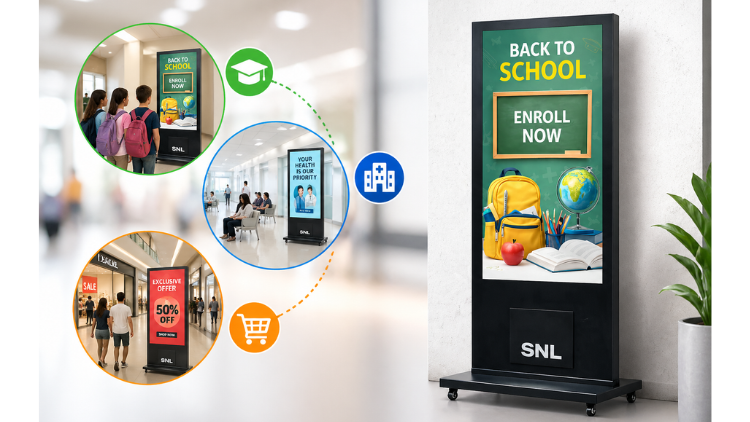
Digital signage uses digital screens to display content like announcements, videos, and advertisements. It works through a software system that allows users to control and update content remotely. Schools, businesses, and institutions use it to share real-time information without printing materials. You can schedule content, change messages instantly, and display multiple formats like images or videos. This makes communication faster and more effective. Unlike traditional notice boards, it offers flexibility and saves time. Many organizations now prefer digital signage because it improves engagement and ensures that people always see updated and relevant information.
In 2026, businesses need faster and more engaging communication methods. Digital signage helps them display offers, promotions, and important messages in real time. Customers pay more attention to dynamic content compared to static displays. It also allows businesses to update information instantly without extra cost. This improves customer experience and increases visibility. In competitive markets, businesses must stand out, and digital signage helps them do that. It also supports centralized control, which makes it easier to manage multiple locations. Overall, it improves efficiency, branding, and communication in modern business environments.
Educational institutions use digital signage to improve communication with students and staff. Schools can display announcements, exam schedules, and important updates on screens. This reduces confusion and ensures everyone receives information quickly. Teachers can also use it to show visual content, which makes learning more engaging. It helps create a modern classroom environment where students stay informed and interested. Institutions also save money by reducing printing costs. Digital signage makes daily communication smoother and supports a more organized and efficient education system.
Yes, digital signage is cost-effective in the long run. Traditional methods require frequent printing and replacement, which increases expenses over time. Digital screens eliminate these recurring costs because you can update content instantly. Although the initial setup cost may be higher, the long-term savings make it a smart investment. Businesses and schools also save time and effort by avoiding manual updates. This improves efficiency and reduces operational costs. Many organizations find that digital signage provides better value because it combines communication, advertising, and information sharing in one system.
Yes, one of the biggest advantages of digital signage is remote control. You can manage content from a central system and update multiple screens at once. This is especially useful for organizations with multiple locations. You can schedule content, make instant changes, and ensure consistency across all displays. Remote management saves time and reduces manual work. It also allows businesses and institutions to respond quickly to changes. This feature makes digital signage a powerful tool for modern communication and efficient operations.
Digital signage improves customer engagement by using dynamic visuals like videos, animations, and interactive content. People naturally pay more attention to moving visuals than static text. This helps businesses attract customers and communicate messages more effectively. It also allows personalized and timely content, which makes communication more relevant. Customers are more likely to notice and remember digital displays. This leads to better engagement and increased interest in products or services. Digital signage helps create a more interactive and modern experience for customers.
Yes, digital signage is suitable for businesses of all sizes, including small businesses. It helps small businesses compete with larger brands by improving visibility and communication. Even a single screen can make a big difference in attracting customers. Small businesses can display offers, promotions, and important updates easily. It also reduces the need for printed materials, which saves money over time. With affordable options available, many small businesses now adopt digital signage to create a professional image and improve customer engagement.
Digital signage supports eco-friendly practices by reducing the need for paper-based communication. Traditional methods rely on printed posters and notices, which create waste. Digital screens allow organizations to share information without printing anything. This reduces paper usage and helps protect the environment. It also lowers the carbon footprint associated with printing and distribution. Many institutions prefer digital signage because it aligns with sustainability goals. By going paperless, organizations not only save resources but also show their commitment to environmental responsibility.
Digital signage can display a wide range of content, including announcements, videos, images, and advertisements. Schools can show schedules, event updates, and educational content. Businesses can display promotions, product information, and brand messages. You can also schedule different content at different times of the day. This flexibility allows organizations to use one screen for multiple purposes. Digital signage makes it easy to keep content fresh and relevant, which improves communication and engagement.
Yes, digital signage is a future-ready solution because it supports modern technology and evolving needs. It integrates with cloud systems, remote management tools, and advanced software features. Organizations can easily upgrade and expand their systems as needed. It also allows data-driven decisions by analyzing content performance. As communication becomes more digital, digital signage will continue to play a key role. Businesses and institutions that adopt it now will stay ahead and remain competitive in the future.