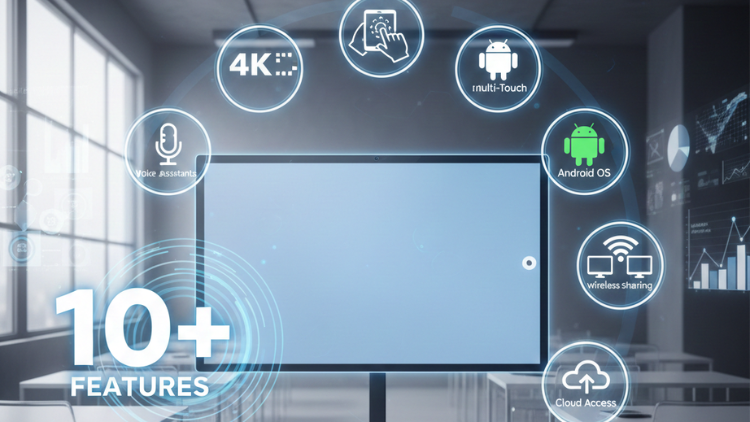
Classrooms in India are changing fast. Teachers no longer rely only on chalkboards or basic digital screens. Students expect engaging lessons, visuals, and interactive learning experiences. School owners and decision-makers now look for technology that supports teachers, improves student outcomes, and stays future-ready.
In 2026, choosing the right interactive flat panel is no longer about screen size alone. It is about intelligence, performance, ease of use, and long-term value. A modern classroom now needs an AI-powered interactive flat panel that supports smart teaching, crystal-clear visuals from a 4K interactive flat panel, advanced classroom intelligence through an AI smart classroom display, and smooth collaboration with a multi-touch interactive panel.
This blog explains the 10 must-have features every school, college, and coaching institute in India should look for before investing in an interactive flat panel in 2026.
1. AI-Powered Teaching Assistance
Artificial intelligence is no longer optional in classrooms. In 2026, teachers expect smart support, not just a digital screen. An interactive flat panel should assist teachers in lesson planning, content organization, and classroom delivery.
An AI-powered interactive flat panel helps teachers generate lesson ideas, explain complex topics, and manage classroom content in less time. Teachers can focus more on teaching and less on preparation. AI features also help adapt lessons for different learning levels, which is crucial in Indian classrooms with diverse student abilities.
When schools invest in panels with strong AI support, they improve teaching efficiency and reduce teacher workload significantly.
2. Crystal-Clear 4K Visual Quality
Visual clarity plays a big role in student attention and understanding. In 2026, anything less than 4K resolution feels outdated. A 4K interactive flat panel ensures that text, diagrams, videos, and images appear sharp from every corner of the classroom.
Indian classrooms often have large student strengths. A high-resolution display ensures that students sitting at the back also see content clearly. Teachers can zoom into maps, science diagrams, or math problems without losing clarity.
A 4K interactive flat panel also supports multimedia learning, which helps visual learners understand topics faster and remember them longer.
3. Advanced AI-Based Classroom Intelligence
Smart classrooms need smart decision-making tools. An AI smart classroom display does more than show content; it understands classroom needs. It can recommend teaching resources, track usage patterns, and support personalized teaching.
With an AI smart classroom display, teachers can manage multiple tasks easily. They can switch between subjects, access stored content, and use intelligent tools without interrupting the flow of teaching.
For Indian schools that aim to improve learning outcomes and teacher productivity, AI-based intelligence becomes a must-have feature.
Classroom learning works best when students participate actively. A multi-touch interactive panel allows multiple students to write, draw, and interact with the screen at the same time.
This feature supports group activities, problem-solving sessions, and collaborative learning. Teachers can invite students to solve math sums, label diagrams, or brainstorm ideas together.
A reliable multi-touch interactive panel also ensures smooth touch response without lag. This matters a lot in classrooms where time and attention are limited.
5. Built-In Teaching Tools and Whiteboard Software
Teachers need ready-to-use tools, not complicated software. In 2026, an interactive flat panel should come with built-in whiteboard software that supports writing, drawing, highlighting, and saving notes instantly.
Good whiteboard software helps teachers record sessions, save important explanations, and reuse content for revision classes. It also supports digital teaching methods without technical hurdles.
When combined with an AI-powered interactive flat panel, these tools make everyday teaching faster, smarter, and more effective.
6. Seamless Device Connectivity
Indian classrooms use multiple devices, such as laptops, tablets, document cameras, and sometimes student devices. An interactive flat panel must connect easily with all of them.
Wireless screen sharing, USB-C support, HDMI ports, and cloud access should come as standard features. Teachers should not struggle with cables or settings during class.
A modern AI smart classroom display supports smooth device integration, helping teachers switch between teaching tools without breaking student focus.
7. Reliable Performance for Long Classroom Hours
Schools in India often run for long hours, and panels remain active throughout the day. Durability and consistent performance matter a lot.
A 4K interactive flat panel designed for education should handle continuous usage without overheating or slowing down. Strong hardware, quality panels, and stable operating systems ensure long-term reliability.
Investing in durable technology reduces maintenance costs and prevents classroom disruptions.
8. User-Friendly Interface for Teachers
Not every teacher feels comfortable with complex technology. In 2026, simplicity becomes a key requirement. An interactive flat panel should offer a clean interface that teachers understand easily.
An AI-powered interactive flat panel guides teachers through features without confusion. Icons, menus, and tools should feel intuitive, even for first-time users.
When teachers feel confident using technology, they use it more effectively in daily teaching.
Digital classrooms handle sensitive data, lesson content, student work, and sometimes recorded sessions. Schools must protect this data properly.
An AI smart classroom display should offer secure login options, data encryption, and controlled access. Teachers should manage who can view, edit, or share content.
Strong security features build trust among schools, teachers, and parents while supporting responsible digital learning.
10. Future-Ready Multi-Touch Collaboration
Collaborative learning will continue to grow in 2026 and beyond. A multi-touch interactive panel supports teamwork, creativity, and active participation.
Students can work together on projects, solve problems on the screen, and learn from peer interaction. Teachers can conduct engaging activities that keep students involved throughout the lesson.
A responsive multi-touch interactive panel ensures smooth collaboration without technical interruptions, making classrooms more interactive and student-centric.
Why These Features Matter for Indian Schools in 2026
India’s education system faces unique challenges, such as large classrooms, diverse learning levels, and increasing pressure on teachers. Schools need technology that solves real problems, not just looks modern.
A combination of smart intelligence, visual clarity, and interactive capabilities makes a big difference. When schools choose an interactive flat panel with the right features, they improve teaching quality, student engagement, and long-term value.
A future-ready classroom depends on thoughtful technology choices that support both teachers and learners.
Conclusion
Choosing the right interactive flat panel in 2026 requires careful evaluation. Schools should not focus only on price or brand. They should focus on features that improve teaching, simplify classroom management, and support student learning.
A well-designed AI-powered interactive flat panel, supported by sharp visuals from a 4K interactive flat panel, intelligent tools from an AI smart classroom display, and collaboration through a multi-touch interactive panel, creates a complete smart classroom experience.
For Indian schools aiming to stay competitive, improve results, and prepare students for the future, these 10 features are no longer optional, they are essential.
For More Information, Call or WhatsApp on: 89270-89270.
Frequently Asked Questions (FAQs)
Schools should upgrade because teaching methods and student expectations have changed. Interactive flat panels support digital content, visuals, and active participation, which traditional boards cannot offer. In 2026, classrooms need technology that saves teacher time, improves student engagement, and supports different learning styles. Interactive flat panels help teachers explain concepts better, conduct collaborative activities, and reuse saved content. For Indian schools, this upgrade also supports hybrid learning, smart classrooms, and future-focused education without adding extra workload on teachers.
AI helps teachers work smarter, not harder. AI features assist in lesson planning, content suggestions, and quick explanations of topics. Teachers can organize lessons faster and focus more on student interaction. AI also helps adapt teaching for different student levels, which is common in Indian classrooms. With AI support, teachers spend less time preparing and more time teaching. This makes classrooms more efficient, reduces teacher stress, and improves the overall learning experience for students.
Yes, a 4K display is very important in modern classrooms. It ensures clear visibility of text, images, and videos from every seat, even in large classrooms. Many Indian classrooms have high student strength, and clarity matters for attention and understanding. A 4K display also supports visual learning, which helps students grasp complex topics faster. Clear visuals reduce eye strain and keep students engaged throughout the lesson, making teaching more effective and comfortable for both teachers and learners.
Multi-touch functionality allows multiple students to interact with the screen at the same time. This encourages group activities, teamwork, and hands-on learning. Students can solve problems together, write answers, and participate actively instead of just watching. This approach improves confidence and understanding. In Indian classrooms, where interactive learning is growing, multi-touch features help teachers create engaging lessons that keep students involved and attentive throughout the class.
Yes, modern interactive flat panels are designed for teachers, not technical experts. They come with simple interfaces, easy navigation, and built-in teaching tools. Teachers can start using them with minimal training. Clear icons, touch-based controls, and guided features make daily use comfortable. When technology feels easy, teachers use it more often and more effectively. This simplicity helps schools adopt digital teaching smoothly without creating resistance among staff.
Absolutely. Interactive flat panels work well with Indian curriculum requirements. Teachers can use digital textbooks, PDFs, videos, diagrams, and presentations aligned with CBSE, ICSE, and state boards. They can also upload their own content and adapt lessons as needed. This flexibility allows teachers to match classroom teaching with syllabus goals while using modern teaching methods. It makes lesson delivery more effective and student-friendly.
Interactive flat panels are built for long classroom hours and daily usage. They use strong hardware, durable screens, and stable software that handle continuous operation. This durability is important for Indian schools where classrooms run for many hours every day. Reliable panels reduce maintenance issues and avoid class disruptions. A durable interactive flat panel becomes a long-term investment that supports teaching year after year without frequent repairs or replacements.
Interactive flat panels prepare students for a digital-first future. They promote collaboration, digital literacy, and problem-solving skills. Students learn to interact with technology naturally while understanding academic concepts. These skills help students adapt to higher education and future careers. For Indian schools, interactive flat panels bridge the gap between traditional learning and modern digital education, ensuring students stay confident, capable, and ready for future challenges.