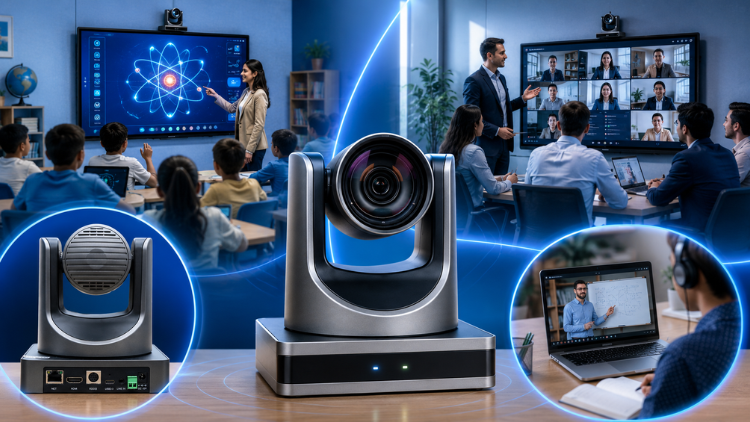
Today’s education and business communication have changed greatly. Schools have hybrid classes, businesses have virtual meetings and training sessions with diverse populations of students from different locations.
To achieve a professional and enjoyable experience, organizations need video solutions with flexibility, clarity, and intelligent automation. One technology that is at the heart of that transformation is the ptz camera. Unlike a traditional fixed camera system, the ptz camera can pan, tilt, and zoom remotely, so it would be ideal for classrooms, conference rooms, lecture halls, and live events. It captures every key moment without the need for a camera operator.
In this blog, you'll learn what a ptz camera is, how it works, why organizations are using it, and what features matter most before making an investment.
What Is a PTZ Camera?
A ptz camera is a remotely controlled video camera that can move horizontally (pan), vertically (tilt), and zoom in or out without losing image quality. The user can control these movements manually through remote or allow AI-powered automation to track speakers and adjust framing automatically.
Unlike fixed cameras, a ptz system covers much more of the area with a single device. So it is ideal for work environments where presenters, teachers, or participants move around frequently.
How Does a PTZ Camera Work?
A ptz camera uses built-in motors to control movement and optical zoom for detailed images from different distances. Modern models also have AI features such as:
Auto framing
Speaker tracking
Gesture control
Preset camera positions
Intelligent subject recognition
These abilities enable the camera to make professional-looking videos with minimal manual intervention.
Why PTZ Cameras Are Becoming Essential for Modern Communication
You should feel like it is natural when you go to meetings and classes, no matter where you are. Traditional webcams will only photograph one side of the room, while fixed cameras need to be tethered to a room.
A ptz camera is able to do so by following a presenter, zooming into important content, and switching its viewing angle automatically. One intelligent camera can significantly improve communication quality, whether you are teaching students, giving quarterly reports, hosting webinars, or training employees.
How PTZ Cameras Are Transforming Smart Classrooms
Smart classrooms rely on interactive technology to keep students engaged. Video is key in this experience. A ptz camera helps teachers to create dynamic lessons by automatically tracking their movement across the classroom.
Students who are away remotely can see demonstrations, whiteboards, interactive displays and classroom discussions.
Practical classroom examples
A science teacher conducts a science experiment and the camera follows the demonstration.
A mathematics teacher writes on an interactive flat panel and remote students have a perfectly framed view.
Universities record lectures for later viewing without having dedicated camera operators.
Coaching institutes stream live classes to students across multiple cities. The result is a better learning experience for students in the field and remote students.
How PTZ Cameras Improve Video Conferencing and Hybrid Meetings
Hence, hybrid work has become the norm in most organizations. Clear communication now relies on quality video.
A ptz camera is set up to track the speakers, captures everyone around the conference table, and delivers high-quality video during meetings. Instead of manually adjusting camera angles in a session
AI tracking keeps the presenters focused on the topic.
Executive board meetings.
Client presentations.
Employee onboarding.
Corporate training sessions.
Product demonstrations.
Global webinars.
Remote participants remain engaged because they always have the best possible view of the discussion.
Key Benefits of PTZ Cameras for Education and Business
Investing in a ptz camera offers advantages beyond improved video quality.
Better engagement
Teachers and presenters can move naturally without worrying about staying inside the camera frame.
Professional recordings
Lectures, webinars and meetings look polished; you get recorded content for future use.
Reduced equipment costs
A single intelligent camera can replace several fixed cameras.
Easy management
People can control camera settings from a central location and reduce maintenance time.
Flexible room coverage
Large classrooms, auditoriums and conference rooms require fewer devices to capture every angle.
Improved collaboration
Remote participants feel closer to one another because they can see presentations and audience interactions.
Essential Features to Look for in a PTZ Camera
Choosing the right ptz camera requires evaluating features that improve both performance and usability.
AI Tracking
Automatically follows teachers or presenters as they move throughout the room.
Auto Framing
Detects participants and adjusts framing without manual control.
4K Video Quality
Produces sharp, detailed images that improve learning and professional presentations.
Gesture Control
Allows presenters to control camera functions using simple hand gestures.
Preset Positions
Stores multiple camera angles for quick switching during classes or meetings.
Smooth Pan, Tilt, and Zoom
Creates professional camera movements without sudden jerks or interruptions.
Low-Light Performance
Maintains clear video quality even in dim classrooms or conference rooms.
Together, these features reduce manual work while improving the viewing experience.
Common Use Cases Across Education, Corporate, Healthcare, and Live Events
A modern camera system serves many industries beyond education.
Education
Hybrid classrooms
Online teaching
Lecture recording
Distance learning
Teacher training
Corporate
Video conferencing
Executive meetings
Sales presentations
Remote collaboration
Training programs
Healthcare
Medical education
Virtual consultations
Conference broadcasting
Surgical training demonstrations
Live Events
Conferences
Religious services
Product launches
Award ceremonies
Live streaming
The flexibility of PTZ technology makes it suitable for almost any professional environment.
Factors to Consider Before Choosing a PTZ Camera
Not every organization has the same requirements. Before purchasing a ptz camera, consider these factors:
Room Size
Large auditoriums need greater optical zoom than small meeting rooms.
Video Resolution
Choose 4K if you frequently record presentations or educational content.
AI Features
Speaker tracking and auto framing reduce manual camera operation.
Connectivity
Ensure compatibility with USB, HDMI, OBS streaming, and popular conferencing platforms.
Ease of Installation
Simple setup reduces deployment time for IT teams.
Budget and Scalability
Invest in a solution that supports future classroom or meeting room expansion.
Selecting the right model ensures long-term value and lower operating costs.
Introducing SNL PTZ Camera
SNL PTZ cameras are designed for educators and creators, ensuring broadcast-quality recording, seamless live sessions, and smooth tracking. Experience professional-quality video with 4K UHD clarity.
Key benefits include:
Ultra-clear 4K camera video output.
AI auto framing.
Gesture control.
AI-based tracking.
Smooth pan and tilt movement.
Preset camera angles for lectures or meetings.
Perfect for classrooms, webinars, and studio recordings.
Future of PTZ Cameras in Smart Learning and Collaboration
Smart learning will be based on smart automation. AI-powered ptz camera technology will evolve to better speaker recognition, voice tracking, scene switching and cloud-based management.
Learning management systems and collaboration software, along with AI meeting assistants, will further simplify classroom and business communication. With hybrid education and remote work increasing in popularity, organizations will be looking for intelligent camera systems that require less manual work and provide high-quality video.
Schools can create engaging digital classrooms, while businesses can bridge the gap between global teams and work together more efficiently and without more technical complexity.
Conclusion
A ptz camera is no longer just a formal broadcasting device. It is now the first tech that schools, universities, businesses, healthcare institutions, and training centers need to be using for better communication.
Remote pan-tilt-zoom control, AI tracking, auto framing, and high-quality video help improve classroom engagement, video conferencing, hybrid learning, and professional collaboration with a set of intelligent cameras.
For organizations that are working on the long-term digital transformation, the latest ptz camera offers increased flexibility, better user experience, and better returns as they increase. The best PTZ solution is for teaching students, conducting webinars, leading board meetings, and working with hybrid teams.
For More Information, call or WhatsApp us on: 89270-89270.
Frequently Asked Questions (FAQs)
A PTZ camera is a video camera that can pan (move left and right), tilt (move up and down), and zoom in or out remotely. Unlike a fixed camera, it covers a larger area without requiring multiple devices. Many modern PTZ cameras also include AI-powered features such as auto tracking, auto framing, and preset positions, making them ideal for smart classrooms, conference rooms, lecture halls, webinars, and live events where presenters or participants move frequently.
A PTZ camera uses built-in motors to control its pan, tilt, and zoom functions. Users can operate it manually through a remote control, software, or joystick, while AI-enabled models automatically follow speakers or adjust framing. Optical zoom allows the camera to capture detailed images without reducing quality. This combination of intelligent movement and high-quality video helps deliver professional recordings and live streams with minimal manual effort.
Schools use PTZ cameras because they make hybrid teaching more interactive and efficient. The camera can automatically follow teachers, capture whiteboards or interactive flat panels, and provide clear video for remote students. It also records lectures for future reference without needing a dedicated camera operator. This improves student engagement, supports distance learning, and helps educational institutions create a consistent learning experience for both in-person and online learners.
A PTZ camera improves video conferencing by keeping presenters and participants clearly visible throughout the meeting. AI tracking automatically follows active speakers, while auto framing adjusts the view based on the number of people in the room. High-resolution video and optical zoom create a professional appearance for board meetings, webinars, client presentations, and virtual collaboration. The result is a more engaging and productive meeting experience for everyone involved.
Hybrid learning requires students in classrooms and remote locations to receive the same quality of instruction. A PTZ camera helps achieve this by capturing the teacher, classroom discussions, demonstrations, and digital content from multiple angles. Features like AI tracking and smooth pan-tilt-zoom ensure students never miss important moments. This creates a more engaging and inclusive learning environment while reducing the need for additional recording equipment.
When choosing a PTZ camera, prioritize features such as AI tracking, auto framing, 4K video resolution, optical zoom, gesture control, preset camera positions, smooth pan-tilt-zoom movement, and strong low-light performance. Also consider compatibility with popular video conferencing platforms, USB or HDMI connectivity, and remote management capabilities. Selecting these features ensures better video quality, easier operation, and long-term value for classrooms and meeting spaces.
Yes. A PTZ camera provides long-term value by replacing multiple fixed cameras with one intelligent solution. Schools benefit from improved hybrid teaching and lecture recording, while businesses gain higher-quality video conferencing and training sessions. AI automation reduces manual camera operation, and remote management simplifies maintenance. For organizations focused on collaboration, communication, and digital transformation, investing in a PTZ camera often delivers an excellent return on investment.
In many cases, yes. A high-quality PTZ camera offers wide viewing angles, powerful optical zoom, and flexible pan-tilt movement that allow it to capture an entire classroom or conference room. Instead of installing several fixed cameras, organizations can often rely on a single PTZ camera to follow presenters, switch between preset views, and deliver professional video coverage, reducing equipment costs and simplifying installation.
Although education is one of the fastest-growing sectors, PTZ cameras are widely used across many industries. Businesses rely on them for video conferencing and training, healthcare organizations use them for telemedicine and medical education, event organizers stream conferences and performances, and places of worship broadcast services online. Their flexibility, automation, and high-quality video make them suitable for nearly any professional environment that requires reliable visual communication.
Start by evaluating your room size, audience, and intended use. Choose a PTZ camera with sufficient optical zoom for larger spaces, 4K resolution for sharp video, AI tracking for automated operation, and connectivity options that match your existing setup. Also consider ease of installation, compatibility with collaboration platforms, and future scalability. Selecting the right camera ensures better performance, improved user experience, and a worthwhile long-term investment.