Top 5 Benefits of Using a Digital Board for Classroom Teaching and Learning
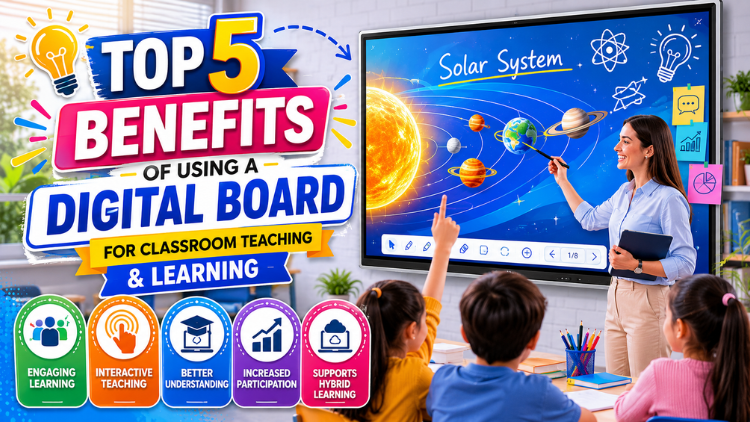
What is a Digital Board for Classroom Teaching?

- Write and annotate digitally
- Display multimedia content
- Conduct interactive lessons
- Access online educational resources
- Collaborate with students in real time
- Save and share classroom content instantly
How Does a Digital Board for Classroom Teaching Work?

Why Schools Are Adopting Smart boards?

- Increasing student engagement
- Supporting multiple learning styles
- Improving teacher efficiency
- Enabling collaborative learning
- Facilitating hybrid education
- Preparing students for digital workplaces
Benefit 1: Improved Student Engagement and Participation

How Smart boards Increase Engagement
- Use interactive quizzes
- Display educational videos
- Create live polls
- Conduct gamified learning activities
- Encourage student participation through touch interaction
Practical Classroom Example
- Attention span
- Knowledge retention
- Classroom participation
- Student confidence
Benefit 2: Interactive and Collaborative Learning Experiences

Collaborative Learning Applications
- Group brainstorming sessions
- Interactive problem-solving activities
- Team presentations
- Collaborative mind mapping
- Project-based learning
Real-World Teaching Scenario
- Communication skills
- Critical thinking abilities
- Teamwork capabilities
- Problem-solving skills
Benefit 3: Better Visual Learning and Content Delivery

Enhanced Teaching Resources
- Videos
- Animations
- Interactive diagrams
- Infographics
- Virtual simulations
- 3D educational models
- Live internet resources
Practical Example
- Learn visually
- Require conceptual understanding
- Struggle with text-heavy instruction
- Benefit from multimedia explanations
Benefit 4: Increased Teacher Productivity and Efficiency

Productivity Features of Smart boards
- Save lesson notes instantly
- Reuse lesson plans
- Record classroom sessions
- Access cloud-based resources
- Share content digitally
- Annotate documents in real time
- Integrate educational apps
Practical Classroom Scenario
- Reduced preparation time
- Improved classroom management
- Better lesson organization
- Faster assessment delivery
- More instructional time
Benefit 5: Support for Hybrid and Future-Ready Classrooms

Supporting Modern Teaching Methods
- Hybrid learning
- Remote instruction
- Video conferencing
- Screen sharing
- Digital collaboration
- Cloud-based teaching
- AI-powered educational tools
Real-World Example
- Continuity of learning
- Flexible teaching delivery
- Increased accessibility
- Technology readiness
How Schools Can Maximize the Value of Smart boards

Recommendations for Schools
Conclusion
- Improved student engagement and participation
- Interactive and collaborative learning experiences
- Better visual learning and content delivery
- Increased teacher productivity and efficiency
- Support for hybrid and future-ready classrooms
Frequently Asked Questions (FAQs)
A smartboard is an interactive digital display used in classrooms that combines touchscreen technology, educational software, multimedia tools, and internet connectivity. Unlike traditional whiteboards or blackboards, a smartboard allows teachers to create interactive lessons using videos, images, annotations, presentations, and collaborative activities. A digital board for classroom teaching helps educators improve student engagement, support different learning styles, and make lessons more interactive. Schools increasingly use smartboards because they simplify lesson delivery, encourage participation, and help prepare students for technology-driven learning environments.
A digital board for classroom works through an interactive touchscreen display connected to an operating system and educational applications. Teachers can write using their fingers or stylus pens, display multimedia content, access online resources, and conduct interactive activities directly on the screen. Most modern smartboard systems support multi-touch functionality, wireless screen sharing, cloud integration, and educational software tools. This technology allows educators to create engaging lessons while enabling students to interact with educational content, participate in collaborative activities, and improve their overall classroom learning experience.
The primary benefits of using a smartboard in education include improved student engagement, enhanced collaboration, better visual learning, increased teacher productivity, and support for hybrid learning environments. A digital board for classroom enables teachers to combine text, images, videos, animations, and interactive activities into a single lesson. This approach helps students understand concepts more effectively while allowing teachers to deliver more engaging and organized lessons. Schools that implement smartboard technology often experience better classroom participation, improved learning outcomes, and greater educational efficiency.
A smartboard improves student engagement by transforming passive learning into an interactive educational experience. Teachers can use quizzes, games, multimedia content, virtual simulations, and collaborative activities to encourage active participation. A digital board for classroom allows students to interact directly with lesson materials through touch-based activities, which helps maintain attention and increases classroom involvement. Interactive teaching methods supported by smartboards often improve knowledge retention, critical thinking skills, and student confidence while making classroom learning more enjoyable and effective.
Yes, a digital board for classroom is generally considered a worthwhile investment for schools because it provides long-term educational and operational benefits. Although the initial investment may be higher than traditional teaching tools, a smartboard improves teaching efficiency, enhances student engagement, supports digital learning initiatives, and reduces dependency on multiple classroom devices. Schools can also save time through reusable lesson materials and digital content sharing. When implemented effectively, smartboards contribute to improved educational outcomes and help institutions build future-ready learning environments.
A smartboard supports collaborative learning by allowing multiple students to interact with educational content simultaneously. Through multi-touch technology, students can solve problems together, participate in group activities, create presentations, and collaborate on classroom projects. A digital board for classroom encourages communication, teamwork, and problem-solving skills while creating a more interactive learning environment. Teachers can organize collaborative exercises that require students to actively participate, discuss ideas, and work collectively, helping them develop essential skills needed for academic and professional success.
Yes, modern smartboard technology plays a critical role in supporting hybrid and online learning models. A digital board for classroom often includes features such as video conferencing integration, screen sharing, lesson recording, cloud connectivity, and remote collaboration tools. These capabilities enable teachers to conduct classes for both in-person and remote students simultaneously. Educational institutions benefit from increased flexibility, continuity of instruction, and improved accessibility. Smartboards help schools adapt to evolving educational requirements while ensuring consistent learning experiences across multiple teaching environments.
A digital board for classroom can support virtually every academic subject, including mathematics, science, social studies, languages, arts, and vocational education. Teachers can use a smartboard to display interactive diagrams, conduct simulations, demonstrate mathematical equations, show educational videos, and create collaborative classroom activities. For example, science teachers can demonstrate experiments visually, while language teachers can use multimedia tools to improve communication skills. The versatility of smartboards makes them suitable for schools, colleges, coaching centers, and higher education institutions.
A smartboard increases teacher productivity by simplifying lesson planning, content delivery, classroom management, and assessment processes. Teachers can prepare lessons in advance, save annotations, record sessions, access cloud resources, and reuse educational materials. A digital board for classroom reduces the need for manual writing and repetitive lesson preparation, allowing educators to spend more time focusing on student learning outcomes. Additional features such as educational software integration, wireless sharing, and interactive assessments further improve classroom efficiency and instructional effectiveness.
Before purchasing a smartboard, schools should evaluate display size, touchscreen responsiveness, operating system compatibility, educational software availability, warranty support, training requirements, and long-term scalability. Decision-makers should also assess whether the digital board for classroom supports multi-touch functionality, wireless connectivity, cloud integration, hybrid learning tools, and curriculum requirements. Investing in teacher training and selecting a reliable technology partner are equally important. A strategic approach ensures schools maximize their return on investment while creating a sustainable and future-ready educational environment.