The Role of Interactive Panels in Creating Smart Classrooms
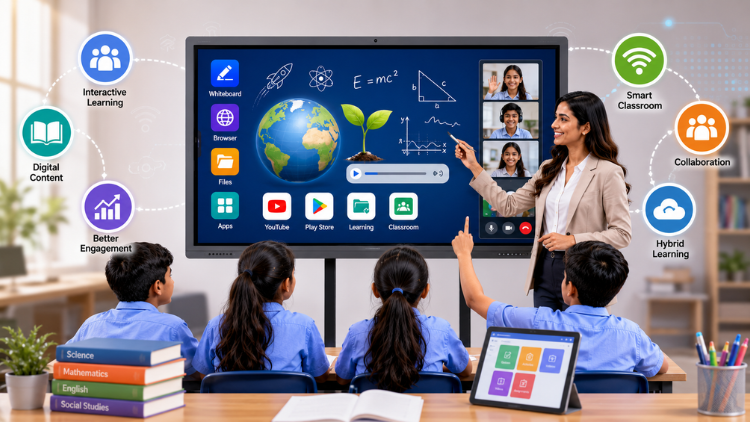
What Is a Smart Classroom?

- Digital teaching tools
- Multimedia learning resources
- Online collaboration platforms
- Interactive displays
- Real-time assessments
- Cloud-based educational content
What Is an Interactive Panel?

- Multi-touch functionality
- High-definition display quality
- Digital whiteboarding tools
- Multimedia integration
- Internet connectivity
- Screen sharing capabilities
- Interactive learning applications
Why Interactive Panels Are Essential for Modern Classrooms

Enhanced Digital Learning
Improved Classroom Participation
Support for Diverse Learning Styles
Better Learning Outcomes
Key Benefits of Interactive Panels for Teachers and Students

Benefits for Teachers
Simplified Lesson Delivery
Time Efficiency
Real-Time Assessment
Benefits for Students
Increased Engagement
Better Understanding
Stronger Collaboration Skills
How Interactive Panels Improve Engagement and Collaboration

Interactive Learning Activities
- Digital quizzes
- Educational games
- Collaborative brainstorming
- Virtual experiments
- Interactive presentations
Group Collaboration
Real-World Learning Experiences
Interactive Panels vs Traditional Teaching Methods

| Features |
|
|
||
| Student Participation | Limited | High | ||
| Multimedia Integration | Minimal | Extensive | ||
| Collaboration | Moderate | Strong | ||
| Content Flexibility | Low | High | ||
| Real Time Feedback | Difficult | Easy | ||
| Lesson Interactivity | Limited | Extensive |
Smart Board Price and Classroom Value

Looking Beyond Initial Costs
- Durability
- Software capabilities
- Ease of use
- Maintenance requirements
- Educational impact
- Long-term operational savings
Return on Investment
Educational Value Matters
- Improved engagement
- Better collaboration
- Enhanced teaching efficiency
- Increased digital readiness
Important Factors Schools Should Consider Before Investing

Educational Requirements
Ease of Use
Display Quality
Software Compatibility
Technical Support and Maintenance
Budget and Long-Term Value
Future of Interactive Panels in Education

Artificial Intelligence Integration
Hybrid Learning Support
Data-Driven Teaching
Increased Collaboration
Conclusion
Frequently Asked Questions (FAQs)
An interactive panel is a large touchscreen display used in classrooms to deliver lessons, display multimedia content, and encourage student participation. Teachers can write, draw, annotate documents, play videos, and access digital resources directly on the screen. Unlike traditional whiteboards, interactive panels support real-time interaction and collaboration. They help create engaging learning experiences by combining visual content, touch functionality, and educational software in one device. Schools use interactive panels to support modern teaching methods and improve classroom efficiency while enhancing student understanding and participation.
An interactive panel serves as a central technology tool within a smart classroom. It allows teachers to integrate multimedia resources, online content, educational apps, and collaborative activities into daily lessons. Students can interact directly with learning materials, making lessons more engaging and participatory. Interactive panels also support real-time assessments, group discussions, and hybrid learning environments. By enabling dynamic and technology-driven instruction, interactive panels help schools create smart classrooms that encourage active learning, improve communication, and provide better educational experiences for both teachers and students.
Schools are adopting interactive panel technology because it enhances teaching effectiveness and student engagement. Traditional teaching methods often rely on passive learning, while interactive panels encourage active participation. Teachers can present information through videos, animations, presentations, and digital whiteboarding tools that make lessons more engaging. Interactive panels also support collaborative learning and help students develop digital literacy skills. As education continues to embrace technology, schools recognize the importance of interactive tools that improve learning outcomes and prepare students for future academic and professional environments.
The primary benefit of an interactive panel for students is increased engagement during lessons. Students can participate directly in classroom activities, solve problems on screen, and collaborate with peers more effectively. Interactive content such as videos, simulations, and educational games helps students understand complex concepts more easily. The technology also supports different learning styles, including visual, auditory, and hands-on learning approaches. By making lessons more interactive and accessible, interactive panels help improve student motivation, retention, participation, and overall academic performance.
An interactive panel helps teachers streamline lesson delivery and improve classroom management. Educators can access multiple teaching resources from a single device, switch between content formats quickly, and save lesson materials for future use. Interactive panels also make it easier to conduct assessments, gather feedback, and track student participation. The ability to integrate multimedia resources creates more engaging lessons while reducing preparation time. Teachers can focus more on instruction and student interaction rather than managing multiple devices or traditional teaching tools.
Smart board price plays an important role in educational technology purchasing decisions, but it should not be the only consideration. Schools should evaluate factors such as durability, functionality, ease of use, software compatibility, and long-term educational value. A higher smart board price may provide better performance, enhanced features, and a longer lifespan, resulting in a stronger return on investment. Decision-makers should compare the total value offered by a solution rather than focusing solely on upfront costs. Long-term classroom benefits often outweigh initial purchase expenses.
Yes, many educators and administrators believe an interactive panel is worth the investment because it supports better teaching and learning outcomes. Interactive panels help improve student engagement, collaboration, and understanding while simplifying lesson delivery for teachers. They also support digital transformation initiatives and future-ready classroom environments. Although schools must consider smart board price and budget constraints, the long-term benefits often include improved classroom efficiency, enhanced learning experiences, and greater adaptability to modern educational needs. These advantages make interactive panels a valuable educational investment.
An interactive panel improves collaboration by allowing multiple students to interact with content simultaneously. Students can participate in group activities, brainstorming sessions, problem-solving exercises, and collaborative projects directly on the screen. Teachers can encourage teamwork by using interactive tools that promote discussion and shared learning experiences. The technology also supports content sharing and real-time collaboration, making classroom interactions more productive. By creating opportunities for students to work together actively, interactive panels help develop communication, teamwork, and critical-thinking skills that are essential for future success.
Before purchasing an interactive panel, schools should assess their educational goals, classroom requirements, and technology infrastructure. Important considerations include display quality, touch responsiveness, software compatibility, training requirements, maintenance support, and scalability. Schools should also compare smart board price with long-term value, considering factors such as lifespan, reliability, and educational impact. Evaluating how the technology aligns with curriculum objectives and teaching methods can help ensure a successful implementation. Careful planning allows schools to maximize the benefits of their technology investment.
The future of the interactive panel in education looks promising as schools continue to embrace digital learning environments. Emerging technologies such as artificial intelligence, cloud-based collaboration, and personalized learning tools are likely to integrate more closely with interactive classroom displays. Interactive panels will continue to support hybrid learning, real-time assessments, and data-driven instruction. As educational institutions seek more engaging and flexible teaching solutions, interactive panels are expected to remain a key component of smart classrooms. Their ability to enhance collaboration and learning will keep them relevant for years to come.
Related post:
- Can an Interactive Flat Panel with AI Become a Teacher’s Digital Assistant?
- 5 Everyday Teaching Tasks an AI Smart Board Could Make Simpler
- How to Select the Right Interactive Panel for Classroom Based on School Requirements
- Smart Board for Teaching: 5 Questions Every School Should Ask Before Buying
- Smart Board for Teaching Price? Everything Schools Should Know
- The Future of Smart Board in Indian Education
- Interactive Panel Myths Debunked: 5 Things Every School Should Know
- The Future of Smart Classrooms: Why Digital Board Is Becoming Essential
- Dept of Agricultural Research and Education, Uttarakhand Chooses SmartSchool Education for Advanced Digital Learning Solutions
- The Future of Smart Classrooms with Interactive Flat Panels